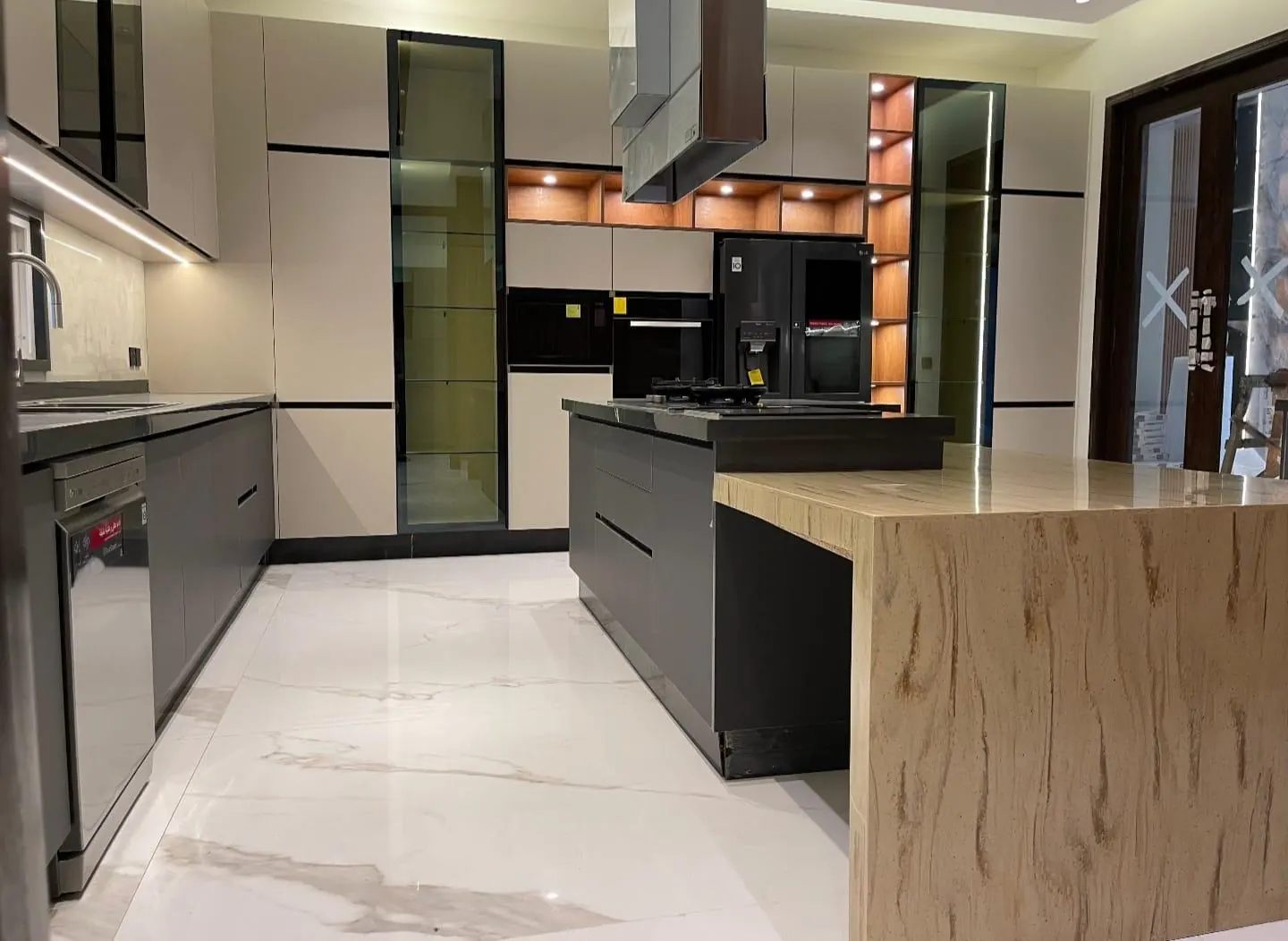
Almost every client who walks into our Lahore workshop asks some version of the same question: "Corian or Dekton — which one should I get?" It's a fair question, because both are premium solid surfaces, both look excellent, and both are more expensive than tile or laminate. But they're built differently and suit different parts of a home. Here's the honest comparison, from a fabricator that works with both materials daily.
The short answer
- Choose Corian if you want a seamless, curved, or backlit design — vanities, integrated sinks, reception desks, bathtub surrounds.
- Choose Dekton if you want maximum heat and scratch resistance for a high-traffic kitchen or an outdoor surface exposed to sun and weather.
What each material actually is
Corian is a solid surface made of roughly two-thirds natural minerals and one-third acrylic resin. This resin content is exactly what makes it thermoformable — it can be heated and shaped into curves, joined invisibly, and even backlit for a glowing effect. It's the material of choice for bespoke, sculptural pieces.
Dekton is an ultra-compact surface made from a sintered blend of quartz, glass, and porcelain particles, compressed under extreme pressure. There's no resin involved, which is why it can handle much higher heat and resists scratching better than almost any surface on the market.
Head-to-head comparison
| Factor | Corian | Dekton |
|---|---|---|
| Heat resistance | Good, but avoid direct hot pans | Excellent — handles direct heat from cookware |
| Scratch resistance | Good, minor scratches sandable | Excellent — among the hardest surfaces available |
| Shaping & curves | Excellent — can be moulded seamlessly | Limited — cut, not moulded |
| Seamless joints | Yes, invisible seams possible | Joints are visible, though tight |
| Outdoor use | Not recommended | Fully UV-stable, safe outdoors |
| Typical cost | More budget-friendly | Higher, reflects advanced manufacturing |
| Best for | Vanities, sinks, reception desks, curved designs | Kitchen counters, outdoor kitchens, high-traffic commercial spaces |
Where Corian wins
If your project involves a bathroom vanity with an integrated sink, a curved reception desk, or anything where you want zero visible joints and a soft, sculptural look, Corian is simply the better tool for the job. It's also the more forgiving material if a surface ever gets scratched — a light sanding restores it, which isn't as easy with Dekton.
Where Dekton wins
For a daily-use kitchen countertop — especially in households that cook a lot, place hot pots directly on the surface, or want a material that will look the same in ten years — Dekton's heat and scratch resistance is hard to beat. It's also the only one of the two we'd recommend for outdoor kitchens, rooftop counters, or anything exposed to Lahore's summer sun, since it won't fade or degrade under UV.
Can you use both in one home?
Yes — and it's actually a common choice among our clients. A typical combination: Dekton for the kitchen countertop (where heat and daily wear matter most) and Corian for the bathroom vanities (where the seamless, curved look matters more). You don't have to pick one material for the whole house.
Every kitchen and bathroom has different priorities — budget, design, how the space is actually used day to day. We fabricate both materials in-house in Lahore and can walk you through which one makes sense for your specific project — request expert advice or reach us on WhatsApp.
Frequently Asked Questions
Is Dekton better than Corian for kitchen countertops?
For a heavy-use kitchen, yes. Dekton resists direct heat from cookware and scratches better than Corian. Corian remains the better choice where seamless joints, curves, integrated sinks, or backlighting matter more.
Which is more expensive in Pakistan, Corian or Dekton?
Dekton is typically the higher-cost option because of its manufacturing process and slab thickness, while Corian is generally more budget-friendly. Fabrication complexity often affects the final price as much as the material itself.
Can Dekton be used outdoors in Lahore?
Yes. Dekton is UV-stable and will not fade or degrade in direct sun, which makes it suitable for outdoor kitchens and rooftop counters. Corian is not recommended for outdoor use.
Can I mix Corian and Dekton in the same house?
That combination is common: Dekton for the kitchen countertop and Corian for bathroom vanities and any curved or seamless pieces.
Keep reading
 MaterialsMay 14, 2026
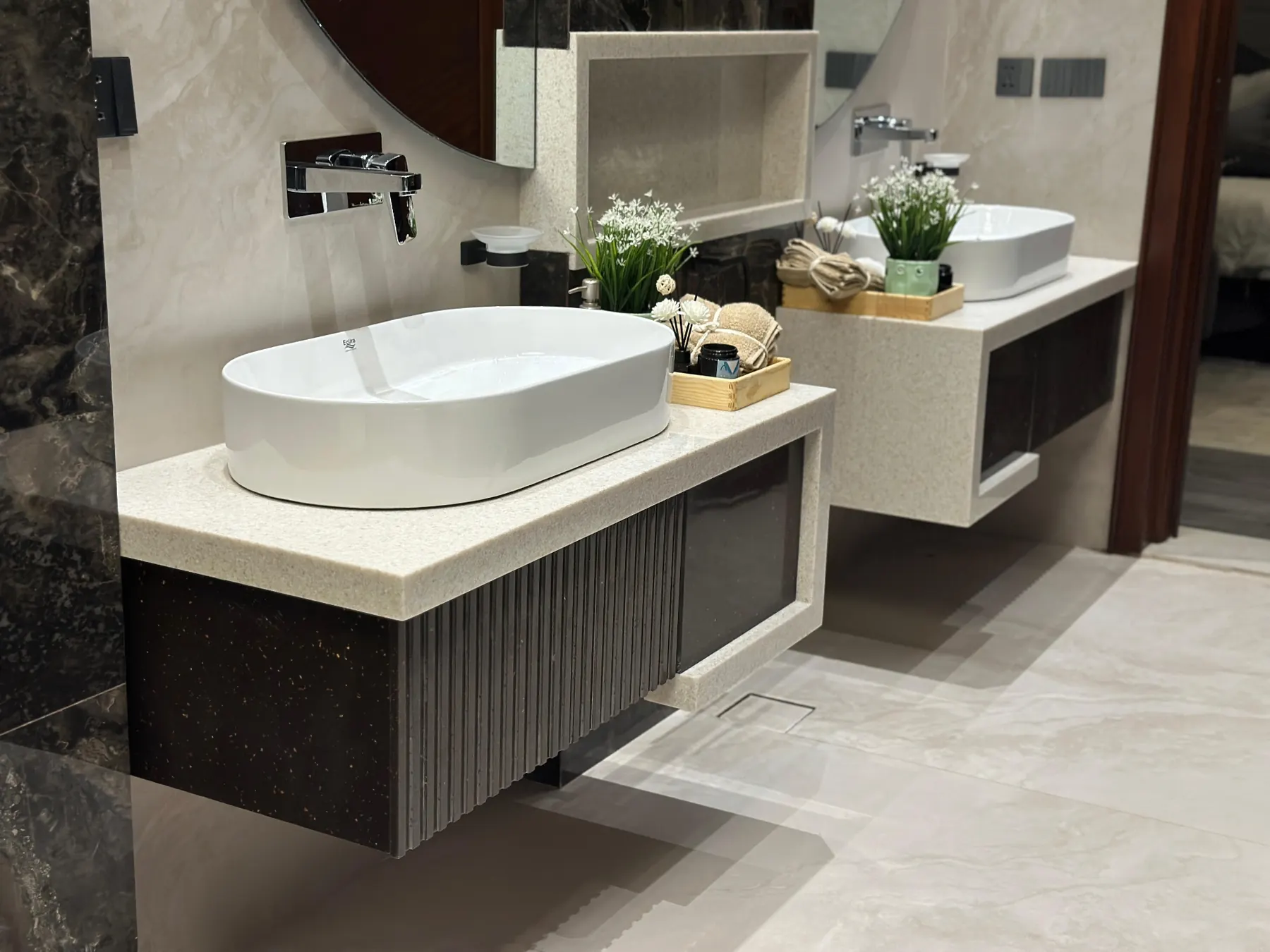
Corian vs Dekton — How to Choose the Right Surface for Your Space
A practical, side-by-side look at seamlessness, heat, scratch resistance, and where each material shines.
Read More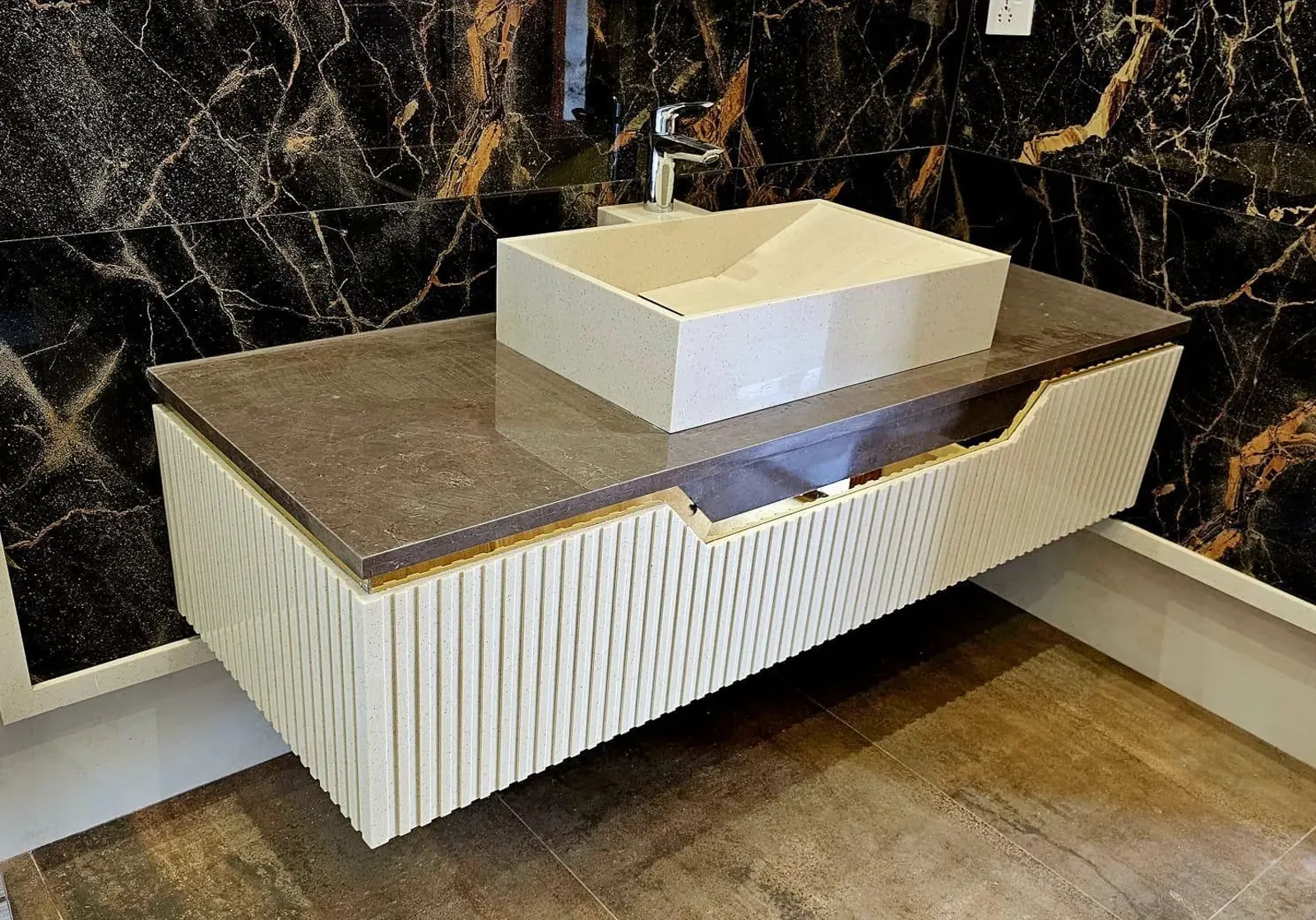 Local GuideAugust 27, 2026
Best Corian Fabricator in Lahore: How to Choose the Right One for Your Project
What actually separates a great Corian fabricator from an average one in Lahore — plus honest pricing insight and the questions to ask before you hire.
Read More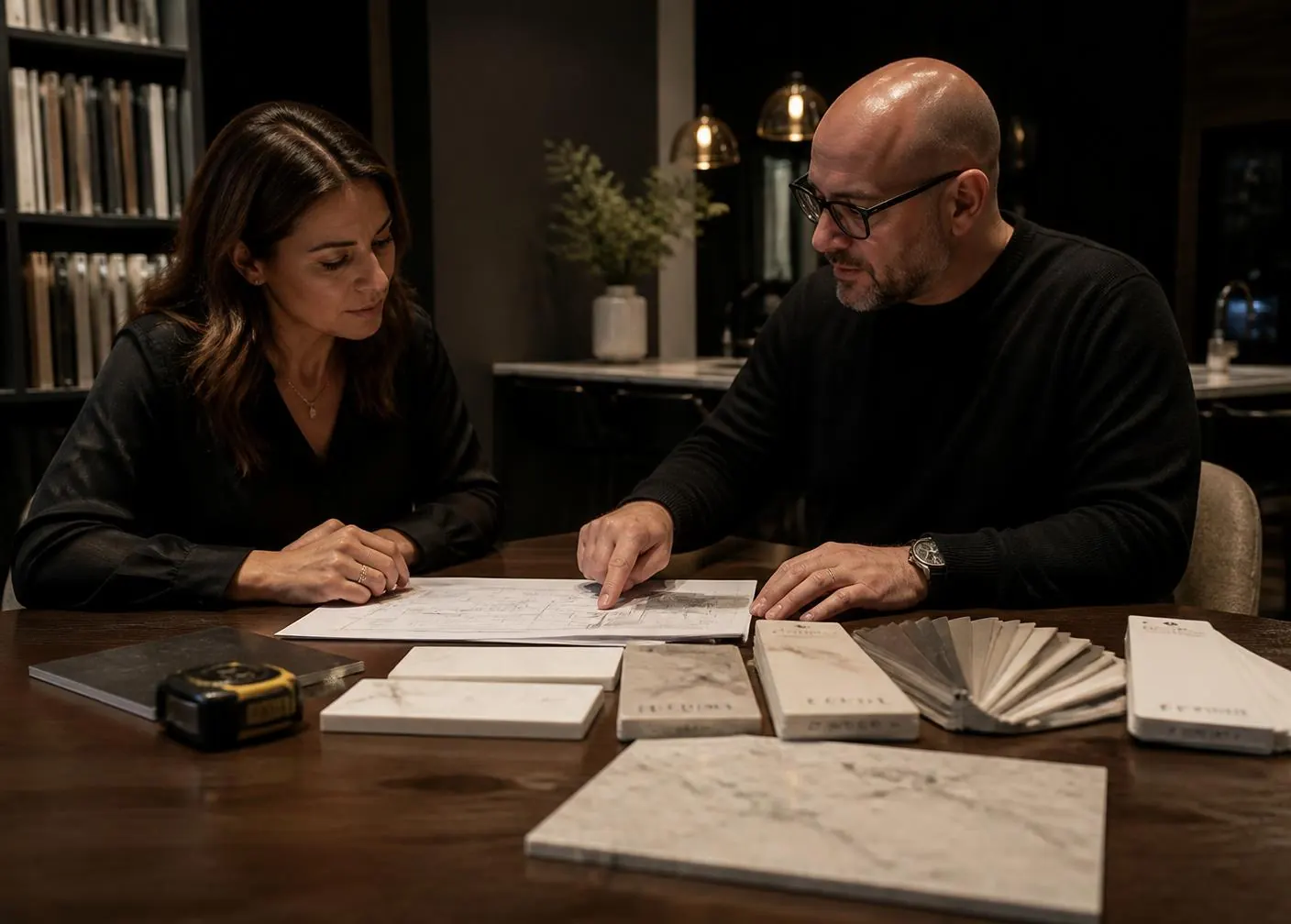 Pricing GuidesAugust 7, 2026
Corian Kitchen Top Price in Lahore: What Actually Drives the Cost
A fabricator's breakdown of how Corian kitchen countertops are priced in Lahore — and what makes one quote higher than another.
Read More